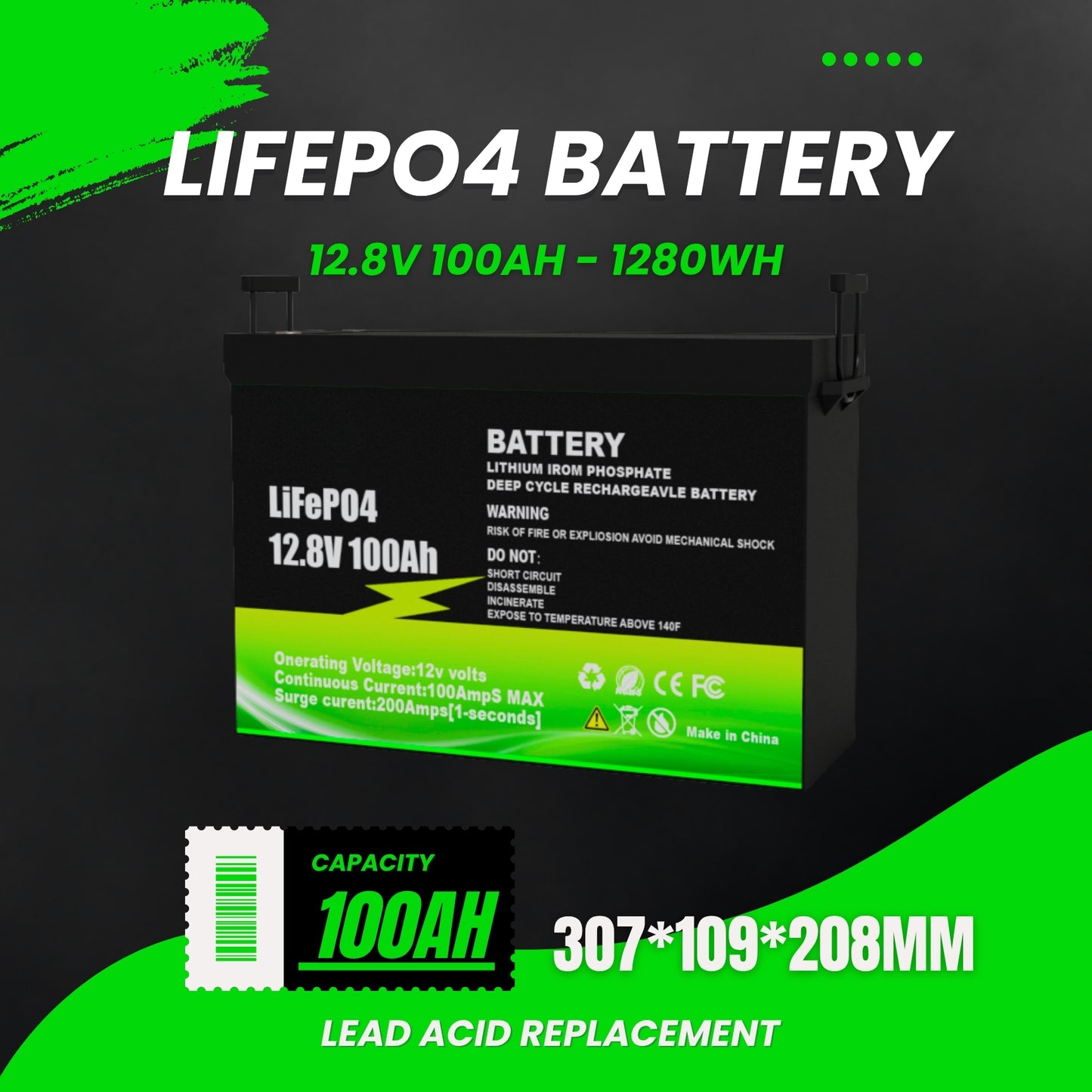
1.28kWh LiFePO4 Battery Pack 12.8V — Deep Cycle Solar Storage, 6000+ Cycles
1.28kWh LiFePO4 Battery Pack 12.8V — Deep Cycle Solar Storage, 6000+ Cycles
A 12.8 V, 100 Ah pack in an ABS shell with an IP55 rating — meaningfully better protected against dust and water jets than the larger metal-cased banks, and light enough to move without equipment.
Where it fits best
- Trolling motors and small marine loads
- Campervan and caravan leisure batteries
- Backup for 12 V lighting and communication equipment
Technical specifications
| Rated Battery Voltage | 12.8 V |
|---|---|
| Energy | 1280 Wh |
| Nominal Capacity | 100 Ah |
| Combination Mode | 4S1P |
| Cycle Life | 6000 cycles @80% DOD |
| Monthly Self-discharge | 3 % |
| Charging Efficiency | 97 % |
| Discharge Efficiency | 98 % |
| Recommended Charging Voltage | 14.4 V |
| Recommended Charging Current | 50 A |
| Maximum Charging Voltage | 14.6 V |
| Maximum Charging Current | 100 A |
| Recommended Discharge Current | 50 A |
| Maximum Discharge Current | 100 A |
| Discharge Termination Voltage | 10.8 V |
| Charging Temperature Range | 0℃~45℃ |
| Discharge Temperature Range | -20℃~60℃ |
| Storage Temperature | 0℃~40℃ |
| Protection Class | IP55 |
| Shell Material | ABS |
| Battery Size (W*D*H) | 390*205*270m m |
| Package Size (W*D*H) | 410*225*290m m |
Questions buyers ask
Can I use it as a drop-in replacement for lead-acid?
Physically yes, and the 12.8 V nominal suits 12 V systems. Confirm your charger has a lithium profile, because lead-acid charging voltages will not correctly charge this pack.
Is IP55 enough for outdoor use?
It handles dust and low-pressure water jets, which covers most outdoor and marine-adjacent installations. It is not rated for immersion or permanent exposure to driving rain.
Explore more from IPV ESSA
Frequently Asked Questions
What is a LiFePO4 battery?
Lithium iron phosphate chemistry that offers long cycle life, thermal stability, and safe deep discharge compared with older battery types.
How long does it last?
LiFePO4 packs typically deliver thousands of charge cycles at 80% depth of discharge, which means years of daily use.
Can I expand capacity later?
Many IPV ESSA systems support parallel battery expansion; check the model manual for the maximum number of units.
Where should I install it?
In a ventilated, dry location away from direct heat and moisture, as with any electrical storage equipment.